

London Blue Topaz is a deep, treated blue variety of topaz created from colorless topaz via controlled irradiation and heat, producing a stable, dark blue color. Properly released stones meet U.S. Nuclear Regulatory Commission safety limits, and topaz rates 8 on the Mohs scale, making it durable for jewelry when worn with care. It’s typically priced higher than Sky and Swiss Blue due to its darker tone and demand.
London Blue Topaz: The Deep-Blue Gem Explained
- Mineral: Topaz
- Chemistry: Al2(F,OH)2Si04
- Color: Yellow, orange, brown, pink, red, purple-red, blue, light green, and colorless
- Mohs Hardness: 8
Coming from an exceptionally wide variety of Topaz colors, London blue topaz is a dark blue topaz with medium to dark tone and saturation. Compared to the Swiss blue topaz, London blue is more valuable and a market favorite.
Natural blue topaz is rare as natural topaz is mainly colorless. As such, most blue topaz in the market today are treated with radiation.
What Makes London Blue Topaz Blue?
Colorless topaz is exposed to controlled irradiation (electron or neutron sources), then often heated to reach the final tone. In the U.S., irradiated gems are only released after they meet NRC safety limits; reputable suppliers hold stones until radioactivity decays to safe levels.
Retailer tip: Always disclose treatments on product pages and in store. Clear disclosure builds trust and lowers returns.
The Process, Step By Step Guide
- Irradiation creates color centers. Ionizing radiation rearranges electrons in the crystal, forming “color centers” that shift absorption and produce blue. Different sources are used: gamma (Co-60), electron beams, or neutrons.
- Heat treatment fine-tunes the hue. A controlled heat step removes unstable yellow-to-brown components created during irradiation and reveals the final blue. London Blue typically requires this heat step after neutron treatment.
- Color stability. The resulting blue is stable to light. Heating to around ~500 °C can drive it back toward colorless. Consumers won’t reach those temps in normal use, but bench jewelers should avoid excessive heat.
All information can be found directly from GIA.
London Blue vs Swiss Blue vs Sky Blue vs Sapphire
- London Blue: Darkest common topaz blue; grayish-navy look.
- Swiss Blue: Vivid, brighter medium blue.
- Sky Blue: Light, pastel blue.
- Blue Sapphire: Different species (corundum), typically higher price and durability profile.
Among blue topaz shades, London Blue often prices higher due to demand for the darker tone, but price varies by cut, clarity, and size.
Value and quality factors
- Color: Even medium-dark blue is desirable.
- Cut: Precision cutting prevents windowing and adds brightness.
- Clarity: Usually eye-clean; avoid obvious feathers near the girdle due to cleavage.
- Carat: Large calibrated sizes are common and budget-friendly relative to sapphire.
(General trade guidance; confirm with your supplier pricing.)
How to Care for and Clean Topaz?
With only a score of 8 on the Mohs Hardness Scale, topaz requires extra care and attention to keep it looking beautiful. It’s not tough because of its basal cleavage, which makes it prone to breakage.
- Avoid prolonged exposure to sunlight or heat to prevent color from fading.
- Do not use ultrasonic cleaning.
- If possible, only use topaz in protective mountings like pendants.
- Keep away from abrasive cleaners or buffing wheels as these cleaners might remove the color coating.
To care for and clean topaz jewelry the right way, consider the following.
- Put on your topaz jewelry only after applying your makeup or styling your hair.
- Avoid putting lotion or hand sanitizer while wearing it.
- Do away from special jewelry cleaners. Simply soak it in slightly warm, soapy water for 10 to 15 mins.
- Carefully rub any dirt build up and soak it again in warm water before patting it dry.
- If possible, store it away from other gemstones and away from light.
History and Meanings
The name ‘topaz’ relates to the Sanskrit word ‘tapas,’ meaning fire. They also associate it with the Egyptian island of Topazios, although the island never produced topaz but rather olivine often confused with topaz and peridot.
Germany’s Erzgiberge Mountains were the first known source of yellow to brown topaz until a large topaz deposit came about in the 1730s in Brazil. Brazil remains to be the largest producer of topaz in the world.
The Ostro: The Famous Blue Topaz
The Ostro is the largest blue topaz displayed in the UK’s Natural History Museum’s Minerals Gallery. British Explorer Max Ostro discovered the rough material in 1960, from which the Ostro was cut.
Ostro is 15 centimeters long and 10.5 centimeters wide with a total weight of 9,381 carats.
Symbolism
Blue topaz echoes the energy of knowledge and wisdom; hence, stone believers commonly associate it with clarity of feelings, honesty, self-confidence, and the ability to learn complex ideas.
Perhaps because of its color, blue topaz is also known to symbolize calmness and peacefulness, and it’s also ideal for spiritual attunement.
Blue Topaz, such as the London blue topaz, is a birthstone for December.
How to Photograph London Blue Topaz with the GemLightbox Macro
In this section, we’ll show you how to photograph London blue topaz using the GemLightbox Macro and a smartphone.
You’ll need:
- The GemLightbox Macro
- A smartphone or your GemCam
- GemLightbox app
Step 1. Power up the GemLightbox Macro and remove the front reflector cover.

First, power up the GemLightbox Macro by pushing the power button on the side of the box. Afterward, remove the front reflector cover.
If this is your first time using Macro, ensure that you set up the smartphone holder first for ease of use in the future. You can watch the complete setup process here.
Step 2. Put the London blue topaz inside the box, on the stone holder.

Next, place the London blue topaz inside the Macro on the stone holder or disc.
Macro comes with three different discs in three different colors and sizes to accommodate different stone sizes and backgrounds. For this demonstration, we used a solid white background.
The three different colors are white, grey, and black. Each disc in varying sizes can hold stones from 1ct to 10ct and above.
After placing the gem inside, don’t forget to put back the front cover.
Step 3. Open the GemLightbox app.
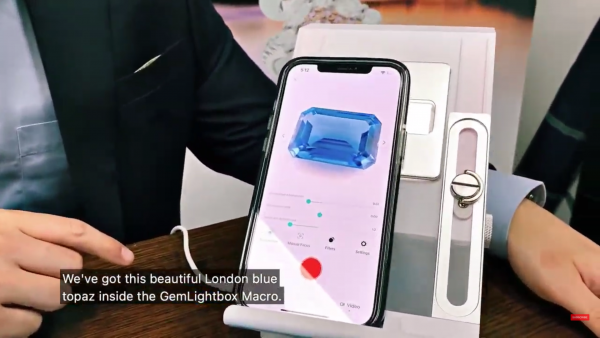
Then, put your smartphone on the smartphone holder and open the GemLightbox app.
The GemLightbox app is available to download for both iOS and Android users.
You may click here to learn more about the features of the GemLightbox app.
From here, you may tap to focus, zoom in or out, or adjust the brightness level as you desire. If you want to capture a 360 video, go to the video mode and choose the angle you want to capture.
With the GemLightbox app, you can capture a video of London blue topaz and other gemstones from a 360 angle, 90, and 45 in either slow or fast rotation.
Step 4. Click to capture!

Finally, click to capture and save.
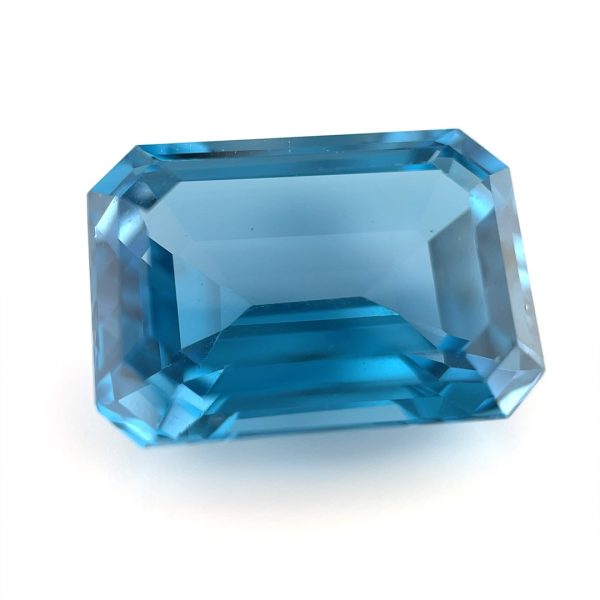
In just a few steps, we were able to capture photos and videos of London blue topaz at different angles with 10x magnification. See the results below.

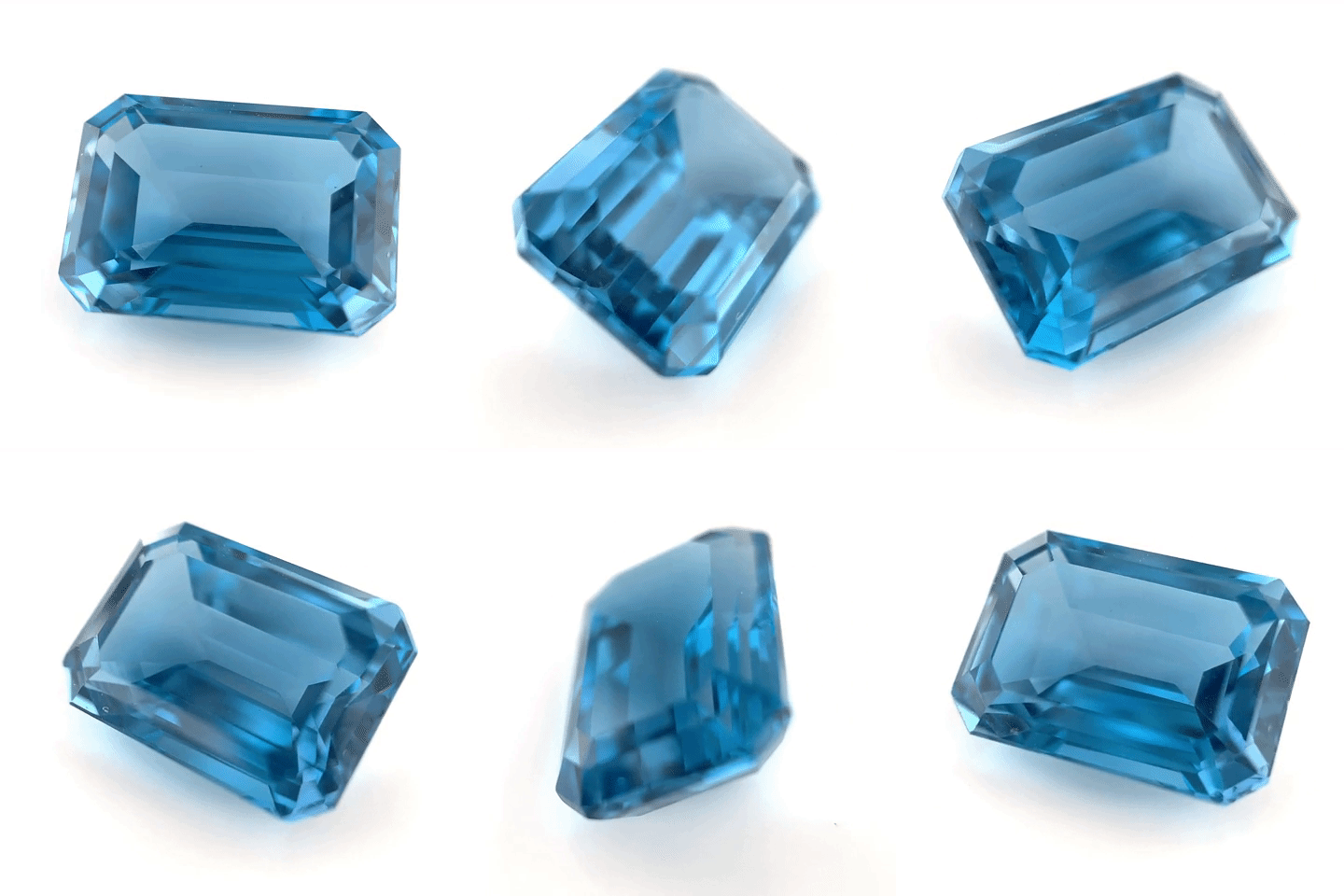
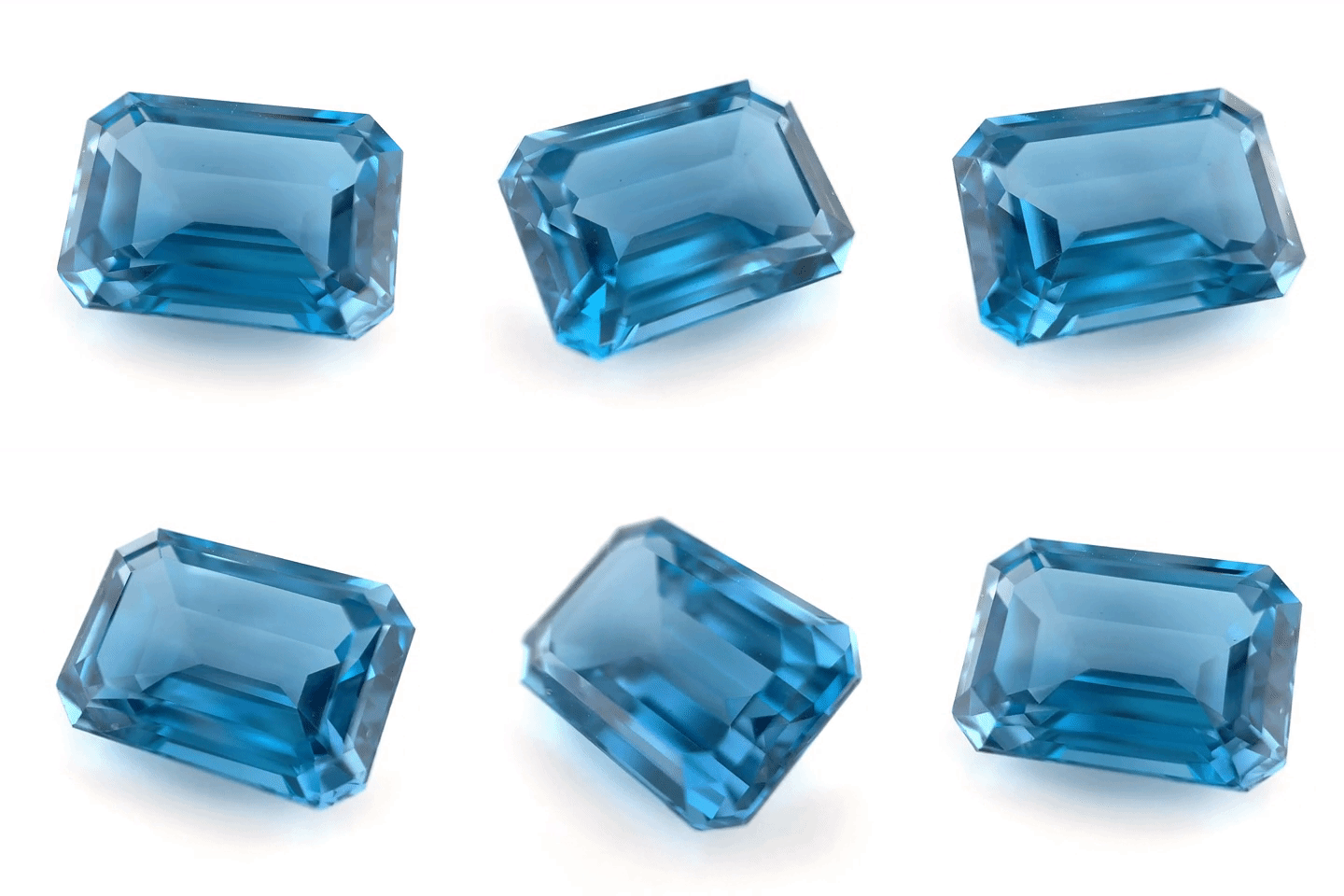
Watch the complete Macro demonstration below.
Frequently Asked Questions:
Is London Blue Topaz natural or treated?
Most are treated by irradiation and heat from colorless topaz.
Is irradiated blue topaz safe to wear?
Yes. In the U.S., stones are released only after meeting NRC limits.
Does London Blue Topaz fade?
The blue produced by irradiation plus heat is considered stable in normal wear; avoid excessive heat and harsh chemicals.
Does it scratch easily?
Topaz is 8 on Mohs, but its perfect cleavage means avoid hard knocks and ultrasonics.
Is London Blue the December birthstone?
Many modern lists include blue topaz for December. Traditional U.S. organizations also list turquoise, zircon, and tanzanite.

Leave a Reply