

Table of Contents
- What changes first: replacement cost, not sentiment
- Design under pressure: less gram weight, more perceived value
- Sourcing and cash: buying smaller, turning faster
- What customers actually see: tighter stories, better visuals
- Workshop reality: less rework, smarter recovery
- Merchandising choices: not everything needs the same treatment
- Communication that travels: calm, short, factual
- A note on the wider conversation
- The bottom line
Gold isn’t just a chart; it’s your cost of goods tomorrow morning. When spot jumps, every gram you replace, every custom quote you write, and every buy-back you price moves with it. Across the trade, jewelers are adapting in practical, visible ways – tweaking design, rethinking procurement, and tightening how they present value to customers.
Below is an industry view – observations, not advice – on what’s actually happening in stores and workshops when the tape runs hot. It folds in themes widely discussed in trade coverage (including recent reporting on how jewelers are tackling higher gold prices) and what we see from operators who navigate volatile weeks without losing credibility at the counter.
What changes first: replacement cost, not sentiment
Markets argue about interest rates and geopolitics; jewelers feel replacement cost. As spot rises, the next purchase order or casting charge resets your cost basis. The margin squeeze doesn’t show up on a P&L right away – it shows up on the tag that didn’t get updated, or the custom quote that sat too long.

That’s why many retailers run tighter repricing cadences on gold-heavy categories and shorten quote validity windows on customs. It isn’t a scare tactic; it’s housekeeping when inputs are moving.
Design under pressure: less gram weight, more perceived value
One pattern keeps surfacing: gram weight is a dial, design is the lever. Jewelers are:
- Refining profiles—smarter tapering, weight where durability demands it, not where it doesn’t.
- Using structure—hollow or semi-hollow links done properly, with honest specs and warranty language.
- Leaning stone-forward—letting diamonds and colored stones carry perceived value while metal does its job as architecture.
- Exploring two-tone and mixed alloys—tasteful contrasts that reduce pure-gold load without cheapening the piece.
- Shifting some SKUs to made-to-order—so grams match the order, not a guess six weeks ago.
None of this is new; what changes in a fast market is cadence and consistency. Small adjustments across dozens of pieces protect look, feel, and margin without asking the customer to accept less.
Sourcing and cash: buying smaller, turning faster
Volatility punishes big bets. Many buyers are breaking purchases into smaller lots, more often, so they “average in” rather than trying to read the week. Others are partially hedging expected metal needs – enough to avoid getting blindsided, not so much that they can’t buy dips. On the cash side, stores are tightening the quote → deposit → metal cycle; deposits lock intent, and intent locks inputs.

Meanwhile, buy-backs become a meaningful source of metal when prices are visible on every phone. Shops that publish a transparent payout grid, authenticate efficiently, and settle same-day tend to win the intake they want – and walk from the rest.
What customers actually see: tighter stories, better visuals
When tags move, trust becomes visual. The fastest way to make a new price land is to show the piece clearly – finish, detail, color, scale; so the shopper judges craftsmanship, not the delta on a sticker. That’s why so many teams now treat rapid reshoots as part of pricing operations, not a marketing afterthought.
A controlled light box and macro-friendly camera keep those reshoots consistent:
- GemLightbox gives repeatable lighting for yellow/rose tones and white backgrounds that don’t fight the metal.

- GemCam Pro captures crisp macro stills and short clips – stone scintillation, milgrain, gallery work – so staff can send a 10-second video with a revised quote and feel confident about it.
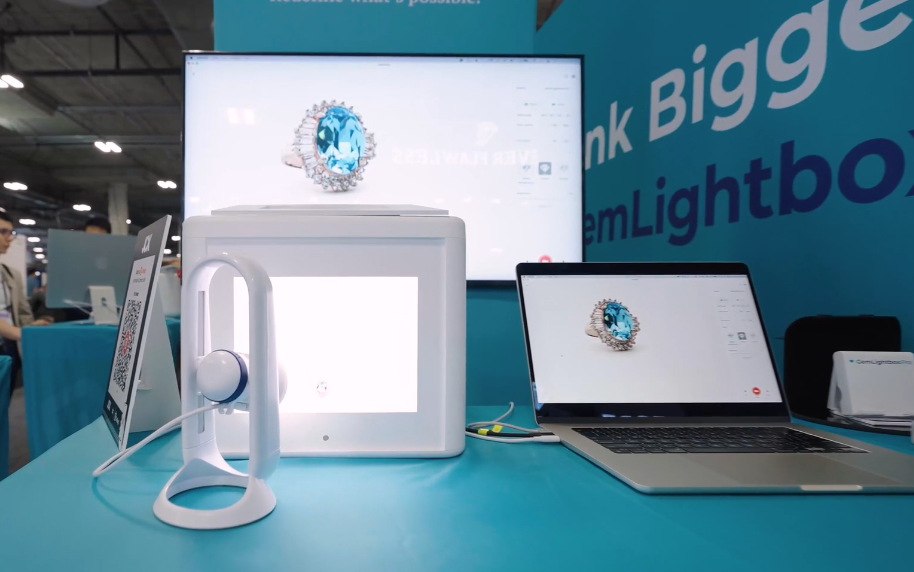
The tools don’t set prices; they reduce friction when prices change. That’s the difference between a debate and a decision.
Workshop reality: less rework, smarter recovery
On the bench, time is the expensive metal you can’t buy back. Shops are sequencing work so deposit-secured customs move first, and they’re tightening QC gates to avoid costly remakes at higher spot levels. Daily scrap and filing recovery is logged with the same discipline as a purchase order; small numbers add up when inputs are elevated.
Merchandising choices: not everything needs the same treatment
Retailers are triaging cases by role:
- Design-led and bridal: rephotograph and re-present first; customers expect clarity and will pay for craft.
- Gold-forward basics: make adjustments in grams and price; consider two-tone variants that keep the look while easing load.
- Aged stock: decide, don’t defer – promote, remount, or melt/recast. “We’ll see next month” is how inventory ages into regret.

Communication that travels: calm, short, factual
Shops that keep conversion high in choppy weeks have a habit of speaking plainly:
- “We update tags regularly so your piece is priced to current gold.”
- “Custom quotes are valid for 7 days; your deposit locks both design and metal.”
- “Here’s a closeup of the gallery and the finish”- paired with a quick macro clip shot in consistent lighting.
No drama, no lectures, just a fair process the customer can follow.

A note on the wider conversation
Trade coverage over the past year has highlighted how jewelers are getting creative when metal runs: lighter-weight engineering that preserves durability, honest use of hollow components, thoughtful two-tone mixes, and tighter photo/video workflows so online and in-store stories match. The common thread isn’t a single trick; it’s operational rhythm – small, repeatable moves that add up to resilience.
The bottom line
When gold runs, certainty is the product. The stores that hold margin don’t bet the week; they tighten their loop – buy a little smarter, build a little lighter, present a little clearer, and keep moving. If your team can reprice confidently in the morning and refresh visuals by the afternoon, you’re already ahead of the conversation.




Leave a Reply