

A Brief Introduction to Diamond
Scintillation is a product of motion, but without any movement from the viewer, the diamond, or the light, it’s challenging to capture the true beauty of this gem in photographs.
Diamond is the only gem composed of one pure single element—carbon—with atoms arranged in a crystal. They formed more than 3 billion years ago, deep in the earth’s mantle under conditions of high temperature and high pressure. These conditions made all four carbon atoms bond together creating a giant covalent structure with very strong covalent bonds: thus, making diamond the hardest material on earth. The diamond’s popularity is a mixture of aggressive marketing, commercialization, and optical properties. It is, after all, one of nature’s most beautiful and precious creations.
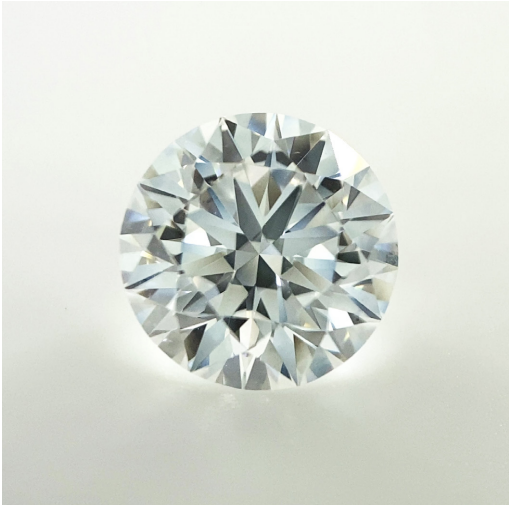

Diamond is a Light Performance
A light performance is a concept that defines the visual effect created by the play of light as it enters, moves, bends, reflects, and exits a diamond. As such, a diamond’s appearance is impacted by the way it reacts to light, and this reaction begins with the diamond’s cut. The cut is human’s only contribution to its beauty. Unlike shape, a cut is technically loaded because it encompasses the arrangement of the facets, the proportion, and the finish. With these factors combined, the cut determines the diamond’s ability not only to transmit light but to create that coveted sparkle.
The diamond’s facet arrangement is critical in understanding the way the diamond interacts with light and its surroundings. Think of it like a hall of mirrors. In the best-case scenario, light will enter a finely cut diamond —it bends, moves, and refracts before it finally exits from the top, returning light to the viewer’s eye in what we know as the sparkle.

Reflection, refraction, and dispersion are the sources of a diamond’s brilliance. Reflection, the light reflected off the diamond’s surface and immediately returned to your eyes, is just a tip of its beauty. As the light travels through a diamond and out, known as refraction, it creates a rainbow effect (dispersion), which adds shine to the diamond. Refraction and dispersion create a pattern of light and dark areas, but while you might think that these dark areas are bad for the diamond, it is what makes scintillation the life of a diamond. Think of it like a candle in the dark. It intensifies the light making it brighter than it ever would be without the contrast.
A diamond exhibits an adamantine type of luster. It is like those vitreous minerals with glass-like luster but way more reflective. Adamantine is the highest luster observed in minerals, which is not surprising given that diamonds have the highest refractive index of 2.42 (glass has about 1.5
only!). Of all gemstones, diamonds have the highest reflectivity. For example, a round brilliant cut diamond has 58 facets. Now, think of that as a mirror with 58 pavilion facets reflecting everything in its surroundings, including you!
These physical properties make diamonds notoriously difficult to photograph and a frustrating experience for many jewelers.
What’s The Matter, Diamantaire?: Common Problems Faced By Jewelers and Diamond Dealers
Problem 1: Capturing Sparkle Through Images
Diamonds have different reactions under different lighting conditions.

Indirect, diffused lighting captures the brightness and contrast of the diamond while direct and spotlighting captures its scintillation. When you present a diamond image to your client, they mostly see only the former because scintillation requires a dynamic component. In a still image, the picture freezes in time; thereby, only allowing you to capture individual flashes but devoid of the actual sparkle that buyers would crave. This experience becomes disappointing for all parties as it doesn’t truly capture the actual beauty you see with your eyes.

Problem 2: Equipment vs. Photographer
Taking photographs of diamonds for assessment and taking photographs for commercial use such as advertisements, selling, and other marketing purposes require two different demands. Unlike the former, the latter affords you a lot of control to ensure that the diamonds appear nicer in photos. Understanding the principles of light enables you to have excellent control of light; then, angles, focus, exposure, and composition. These are key in taking good images of diamonds—but these components also require skills.

If you’ve been in the trade long enough, you’ll notice that there are not a lot of high-quality diamond and other gemstone images around. Jewelers and diamantaires, while possessing sharp business acumen, are not all the time professional photographers. Jewelers often depend on a community of like-minded people for advice and photography tips, especially for small and medium jewelry businesses.
When professional skills are out of the equation, people try to compensate with equipment leading to Gear Acquisition Syndrome (GAS). GAS is the tendency of people to unstoppably acquire more equipment that often cannot be justified by price or usage. Unfortunately, most equipment in the market fails in jewelry and diamond photography. Jewelry, including loose gems and diamonds, is one of the most difficult (if not the most difficult) objects to photograph commercially because of its properties. As such, a one-size-fits-all solution won’t suffice. Don’t expect the photography equipment you used for photographing daily household objects to work for metals and minerals.
87% of jewelers photograph their jewelry in-house
Instore Brain Squad
Based on a survey conducted by INSTORE Magazine, 87% of their polled jewelers
photograph their jewelry products in-house. Commonly, they use smartphones as it’s easy and accessible. They also enjoyed the fact that doing it themselves gives them more control alongside a quick turnaround time. On the other hand, the remaining 13% found that doing it themselves takes too much time away from their selling, especially if they don’t have the time, skills, and equipment to do it properly.
How do you balance it out? Would you buy high-priced camera equipment to compensate for the lack of professional photography skills or must skills come first before equipment? The thing is, both factors are important although your camera system is not as important as your skills and photography experience. But what about jewelers who lack the latter?
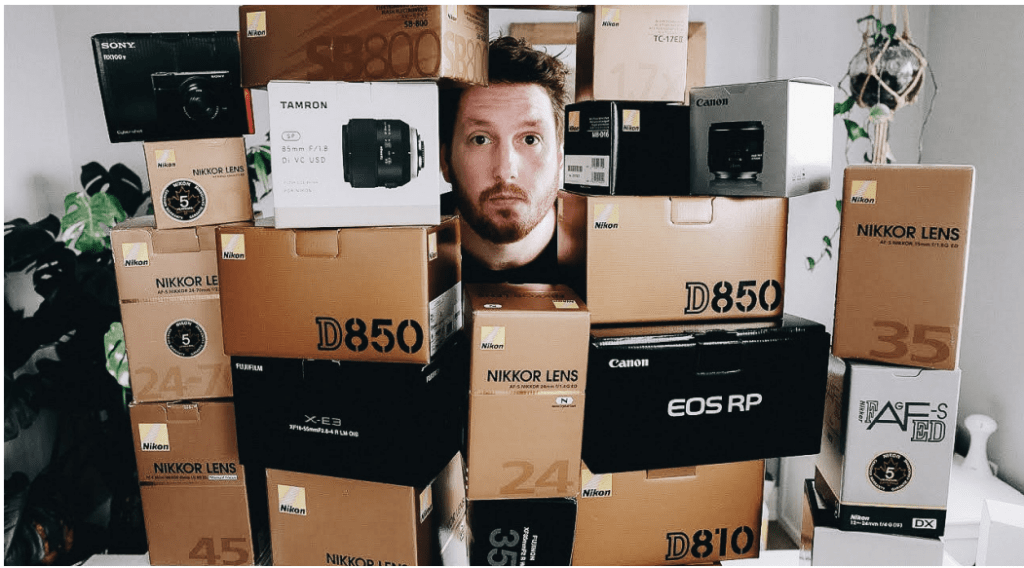
To balance it out, you must understand how your photography equipment can help you create beautiful work. It should be a tool to help make your business thrive, especially digitally. It’s not a toy creating that delusion that the more gear one has, the better the results will be. You only need to find THE ONE.
Problem 3: Time and Cost
The major reason why you don’t see a lot of high-quality gem images and videos around can be divided into three elements.
- Cost
- Difficulty in building the setup including hiring the photographer
- Time
Whether you do it yourself or hire a professional photographer, you still need to invest time and money. If you do it yourself, you need to invest more time because it involves a massive learning curve just to get you to the result you want. This does not even include the time you need to research the right equipment, tutorials, and photoshoots. Factor that in and you’ll no longer have sufficient time for other pertinent aspects of your business.

You can always hire a full-time professional photographer but building the setup will take time and finding the right photographer who understands your brand and whose values align with yours are often too expensive.
If you’re doing one of these, stop and think for a moment—how much is photography costing your business? Most especially, is it worth it?
Why Are High-Quality Photos and Videos Important?

The GemLightbox Macro

Take photos and videos of your loose stones!
Pioneered by our team at Picup Media, GemLightbox Macro is engineered using market-leading technology to capture magnificent 10X magnified images and videos of loose diamonds and gemstones ranging from 0.1 carat to 50 carats –
in just one click using your own smartphone!


Leave a Reply