

Table of Contents:
- The Market Is Growing. Your Conversion Rate Probably Is Not.
- Where Jewelry Buyers Are Actually Spending in 2026
- The Conversion Problem No One Talks About Enough
- What the Numbers Mean for Independent Jewelers Specifically
- The Operators Closing the Gap Have One Thing in Common
- What 2026 Requires From Every Jewelry Brand Online
The global jewelry market is growing. But growth at the market level does not automatically translate into growth at the store level.
For independent jewelers and ecommerce jewelry brands, 2026 is defined less by opportunity and more by the gap between what the market offers and what most operations are actually capturing. The numbers make that gap precise.
The Market Is Growing. Your Conversion Rate Probably Is Not.
The global jewelry market hit $348 billion in 2025. McKinsey identifies jewelry as the fastest-growing category in fashion by unit sales, expanding four times faster than clothing. Online jewelry sales crossed $46.1 billion and are compounding at 13.8% annually.
Those numbers are real. They are also misleading if read in isolation.
The average ecommerce conversion rate for jewelry sits at 1.19%. That is the lowest conversion rate of any retail category tracked. The market is growing and most stores are not keeping pace with it, because the traffic arriving does not convert at the rate the opportunity demands.
Understanding why that gap exists is more useful than celebrating the headline number.

Where Jewelry Buyers Are Actually Spending in 2026
The channel split has shifted sharply. Digital channels now account for 25 to 30 percent of total jewelry purchases. Mobile commerce represents over 60 percent of online jewelry transactions. Gen Z and Millennials drive 70 percent of online luxury jewelry purchases.
Those buyers do not behave the way jewelry retail was originally built to serve them. They discover on social platforms, research across multiple devices, compare independently, and complete purchases on timelines that have nothing to do with your store hours or sales cycle.
28 percent of Gen Z jewelry discovery happens via social platforms. Signet Jewelers now directs more than one quarter of its entire marketing budget to social media. That is not a trend. That is a structural shift in where the purchase journey begins.
The Conversion Problem No One Talks About Enough
A 1.19 percent conversion rate means 98.81 percent of people arriving at a jewelry ecommerce store leave without buying.
The cause is not price. It is not product selection. Research consistently points to one structural issue: buyers cannot get enough visual confidence to commit. 60 percent of online jewelry buyers hesitate to purchase when they cannot see a piece worn in context. The white-background product shot, which became the default format a decade ago, does not close the trust gap for a high-consideration purchase.
Jewelry is one of the most emotionally loaded purchases a consumer makes. Scale, drape, proportion, how a piece catches light against skin, these are not supporting details. They are the decision itself. When images cannot communicate them, browsers stay browsers.

What the Numbers Mean for Independent Jewelers Specifically
Independent jewelry retailers held 42 percent of market share in 2020. That figure has dropped to 35 percent. Chain retailers, department stores, and online pure-plays have absorbed most of that ground.
The independents losing share are not losing on product quality or customer relationships. They are losing on content infrastructure. The operators gaining market share publish consistently, maintain image libraries that function across every channel, and treat visual content as a revenue asset rather than a production cost.
The gap is operational. Which means it is closeable.
The Operators Closing the Gap Have One Thing in Common
The jewelers gaining ground in 2026 have systematized their visual content output. Not outsourced it. Not spent more on it. Systematized it.
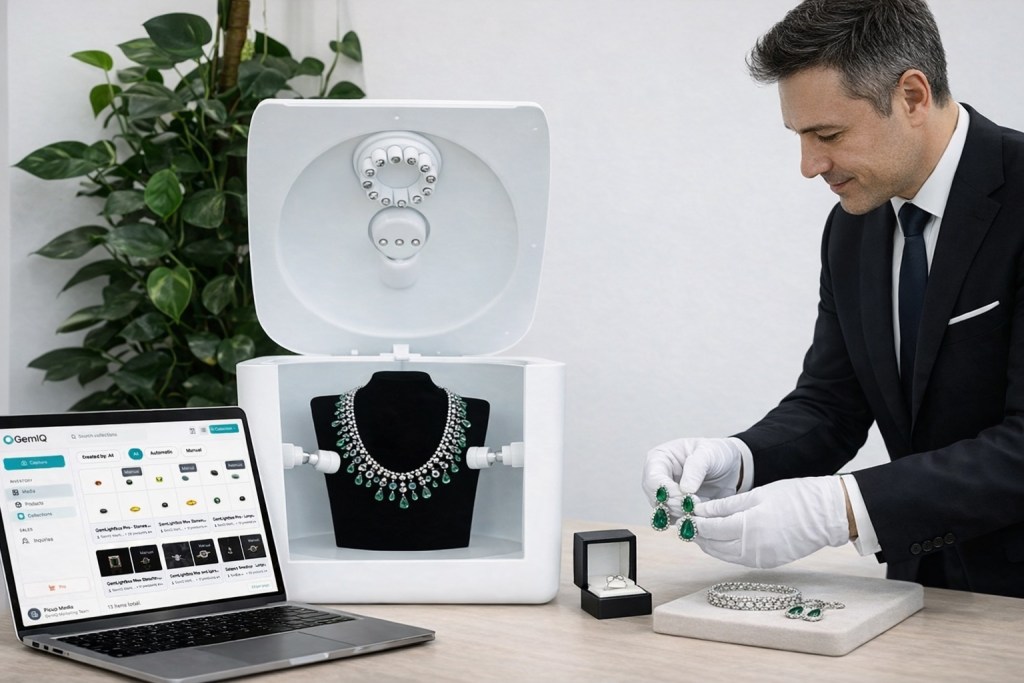
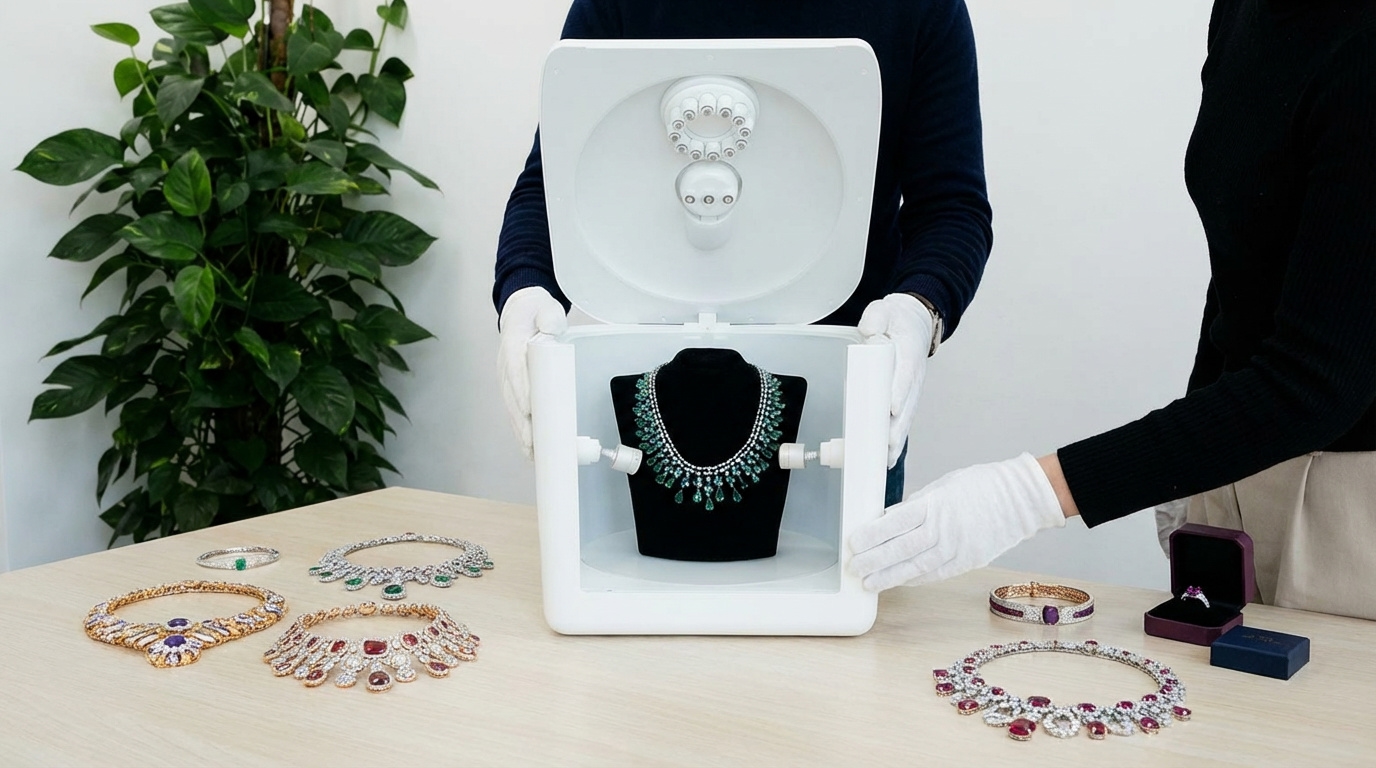
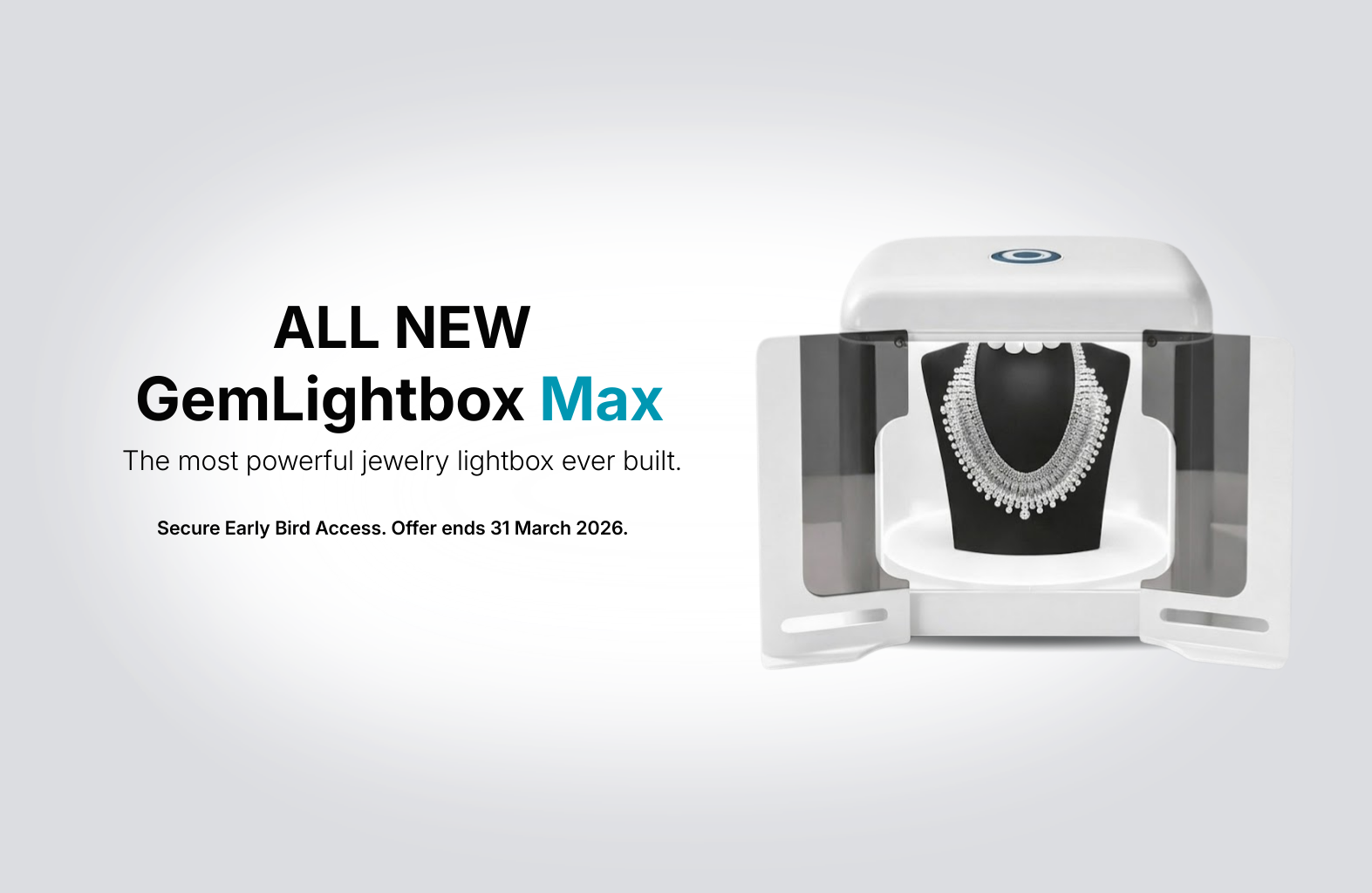
That means a defined shoot process, consistent image standards across every SKU, and a publish cadence that feeds search and social without requiring a full creative team every week. GemLightbox Max is built specifically for this: a complete, professional imaging system that gives independent jewelry operators the output consistency, speed, and quality that used to require full studio infrastructure to achieve.
The brands running GemLightbox Max are not just producing better images. They are producing them at a volume and cadence that compounds over time across product listings, social content, and search visibility. That compounding effect is what closes a market share gap.
For operators who want to see the output quality firsthand, GemStudio offers a free AI-generated jewelry image as a starting point.
What 2026 Requires From Every Jewelry Brand Online
The jewelry ecommerce data in 2026 points toward the same conclusion from every angle. The opportunity is real. The conversion gap is structural. And the structural cause is almost always the same: visual content that does not meet the bar buyers have already set for themselves.
The brands closing the gap are not outspending the market. They are out-systematizing it. A repeatable imaging workflow, an image library built for multi-channel performance, and a publish cadence that keeps the brand visible across search and social, these are not advantages in a $348 billion market. They are the entry requirements for capturing a meaningful share of it.
Sources
- UCFS — 5 Trends Shaping the Jewelry Industry and Market Outlook in 2026 https://www.ucfs.net/trends-jewelry-industry/
- Business of Fashion / McKinsey — State of Fashion 2026: Jewellery Category Sales https://www.businessoffashion.com/articles/luxury/the-state-of-fashion-2026-report-jewellery-category-sales/
- JCK Online — Why Jewelry May Become Fashion’s Fastest-Growing Category https://www.jckonline.com/editorial-article/jewelry-fashions-fastest-category/
- Photta — Jewelry AI Photography Case Study: Boosting Conversions by 32% https://www.photta.app/blog/jewelry-ai-photography-case-study-conversion
- Immerss — 2025 Jewelry Ecommerce Trends: What’s Shaping the Future of Online Luxury Retail https://www.immerss.live/content/jewelry-ecommerce-trends-2025/
- JCK Online — Looking Back on Jewelry Retail in 2025 and Ahead for 2026 https://www.jckonline.com/article-long/jewelry-retail-in-2025-and-2026/
- Carat Trade — 2025 Jewelry Industry Statistics: Global and U.S. Trends https://www.carattrade.com/blog/2025-jewelry-industry-statistics-global-us-trends

Leave a Reply