
- Jewelry photography now influences how buyers decide
- Why jewelry requires a higher visual standard
- The operational problem with traditional photography approaches
- What jewelry photos that sell consistently do well
- A practical core setup for most jewelers
- Mobile capture for speed and flexibility
- Lifestyle imagery without a studio
- When a full system makes sense
- Business outcomes tied to better photography
- A realistic approach
- What This Means for Jewelers in 2026
Jewelry photography now influences how buyers decide
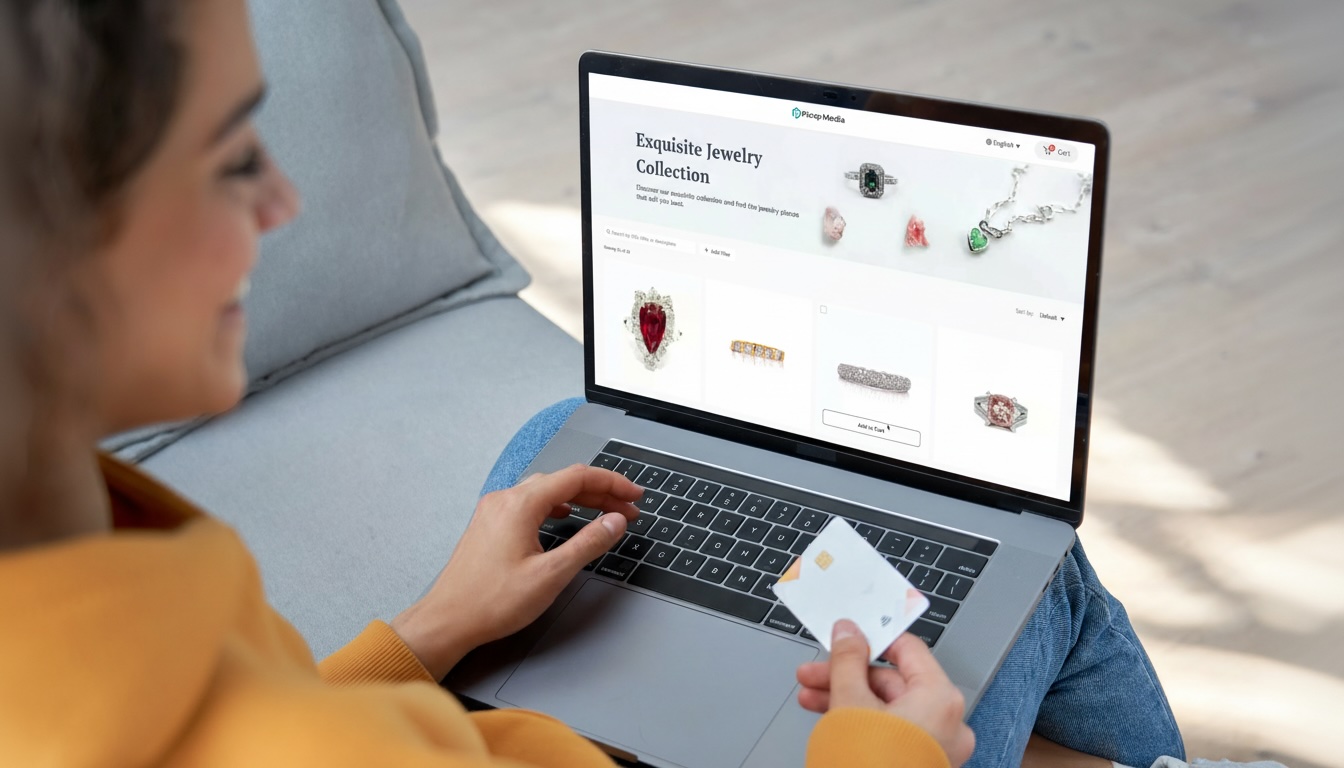
Jewelry buyers have changed how they shop.
They compare pieces across multiple sites.
They zoom into details before reading descriptions.
They evaluate image quality as a signal of credibility.
This shift has turned product imagery into a primary decision factor rather than a supporting asset.
For jewelry, this effect is stronger. When buyers cannot touch or try on a piece, images become the primary source of reassurance.
This is why jewelry photos that sell are not about style trends. They are about removing uncertainty.

Why jewelry requires a higher visual standard
Jewelry is different from most ecommerce products.
It carries higher price points.
It involves emotional purchases.
It has higher perceived risk for buyers.
Baymard Institute research shows that unclear or insufficient product images introduce significant friction and repeatedly cause users to abandon otherwise suitable products during evaluation.
For jewelry, poor images do not just look unprofessional. They signal risk.
Professional jewelry photos reduce that risk by clearly showing:
• True metal color
• Stone clarity and setting
• Scale and proportions
• Craftsmanship details
This is the foundation of effective jewelry product photography.
The operational problem with traditional photography approaches
Many experienced jewelers still rely on outsourced photography or inconsistent internal setups.
This creates common operational issues:
• Long wait times for new product images
• Inconsistent lighting across collections
• High recurring costs
• Limited ability to update listings quickly
Shopify research highlights that high quality, well optimized product imagery is a key driver of engagement and conversion on product pages.
When photography slows launches, it affects revenue timing.
That is why in-house jewelry photography has become a strategic decision rather than a creative preference.
What jewelry photos that sell consistently do well
High performing jewelry photos that sell share the same fundamentals.
They are not overly styled.
They are not experimental.
They are consistent and clear.
Effective images typically include:
• Controlled lighting that reduces glare and harsh reflections
• Sharp macro detail for close inspection
• Neutral backgrounds that keep focus on the piece
• Visual comparability across product pages
This level of consistency requires a reliable jewelry photography setup, not a complex studio.
A practical core setup for most jewelers
For many jewelers, the main challenge in jewelry photography is consistency, not creativity. This is where a standardized baseline matters more than experimentation.
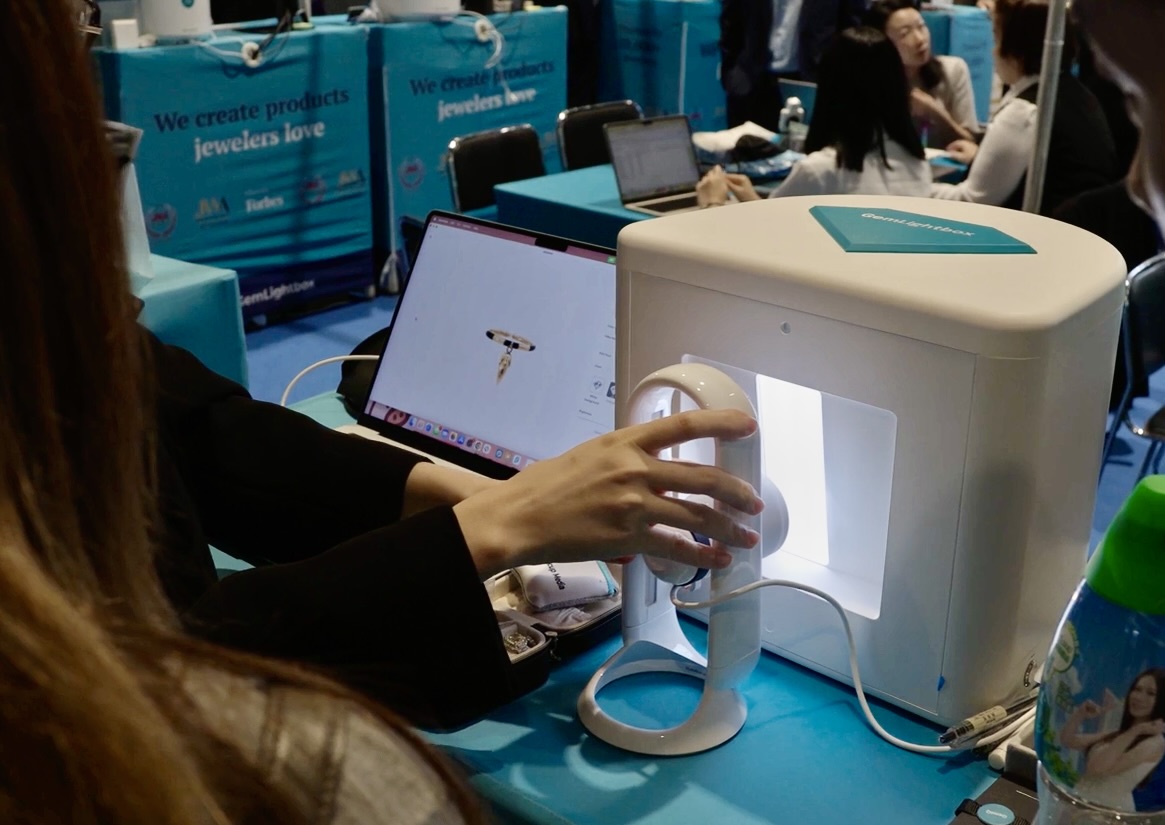
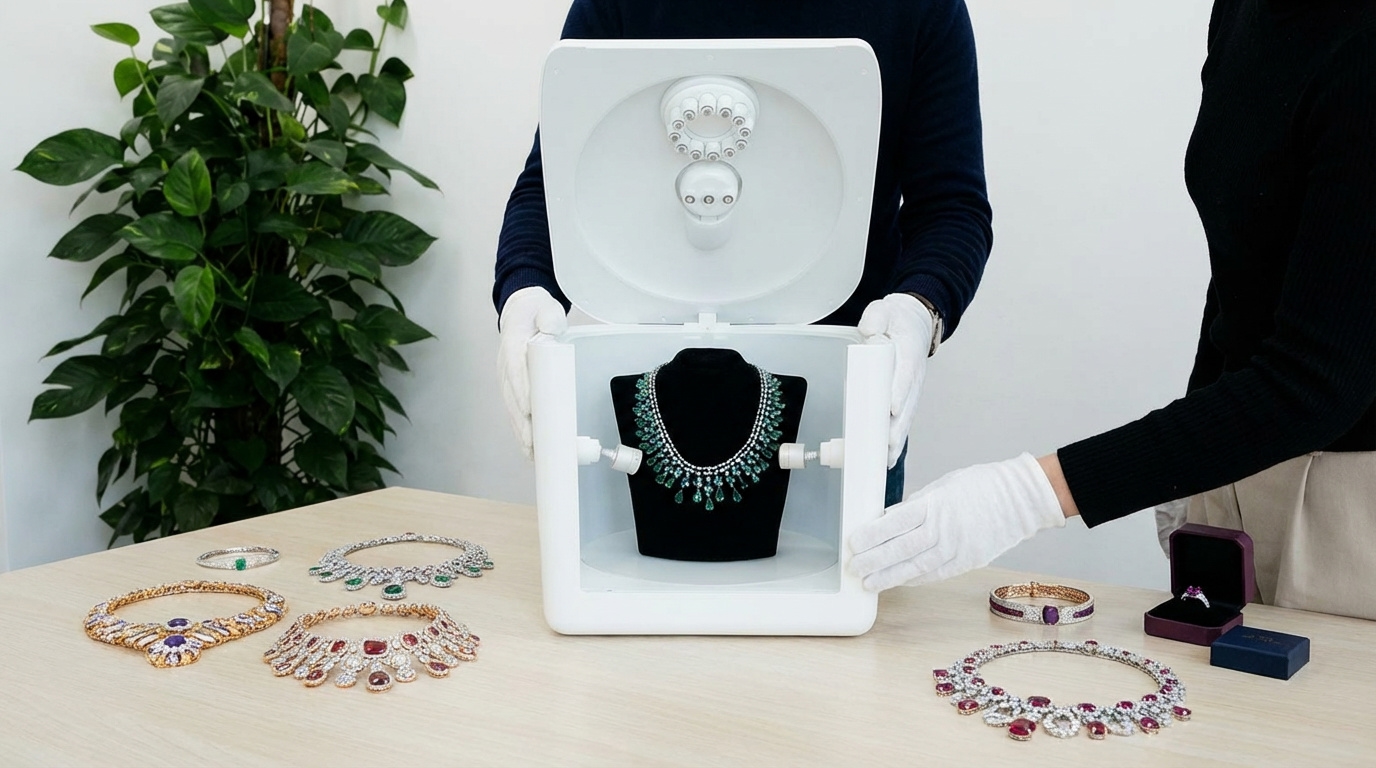
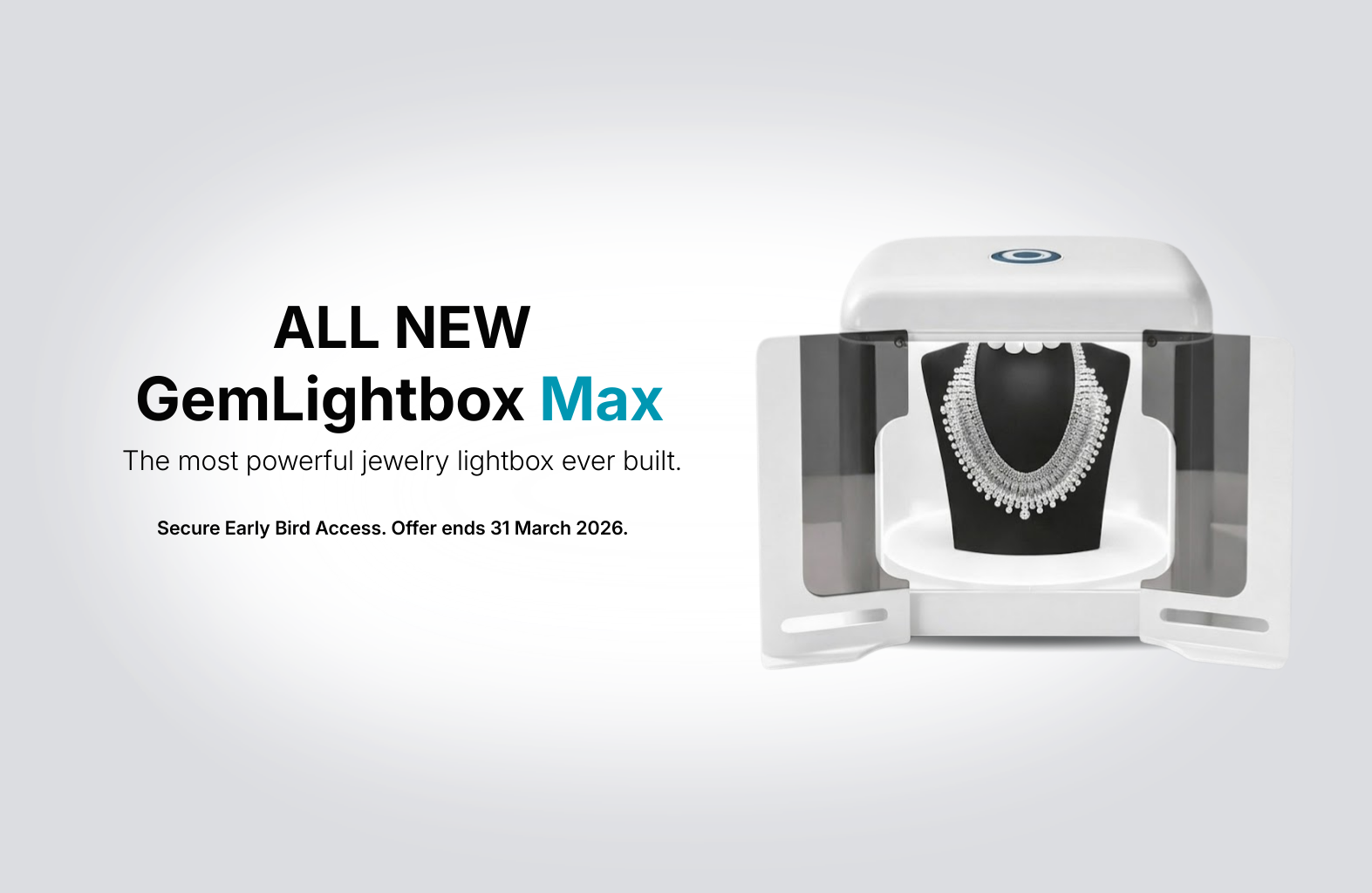
GemLightbox Pro provides a controlled lighting environment designed specifically for jewelry, reducing glare, reflections, and color variation. Because the lighting is fixed and repeatable, there is no need to adjust lights or troubleshoot setups between pieces.
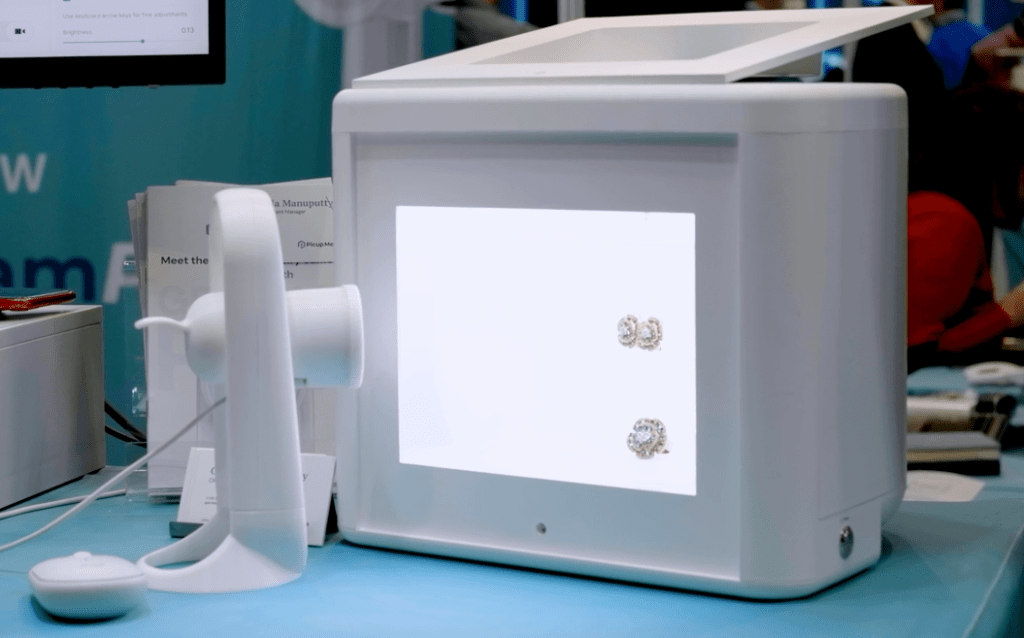
This allows jewelers to capture professional jewelry photos quickly and maintain visual consistency across collections, which is critical for jewelry ecommerce photography where buyers compare details closely.
When paired with GemCam Pro, the workflow becomes more precise. GemCam Pro delivers true macro level clarity, allowing customers to inspect prongs, facets, and settings without loss of detail. This directly supports buyer confidence during zoom and close inspection.
For custom jewelers, diamond sellers, and gemstone dealers, this level of clarity helps remove doubt and supports faster purchasing decisions.
Mobile capture for speed and flexibility
Not every image requires a full setup.
Jewelry teams also need quick capture for:
• New arrivals
• Social content
• Short product videos
• Internal documentation
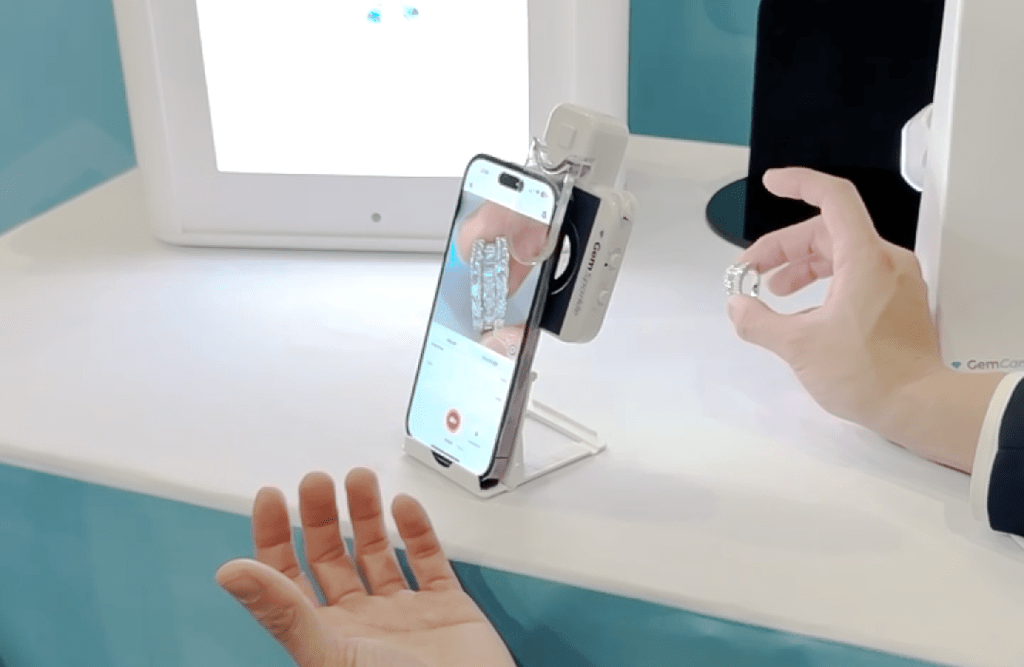
GemSparkle is designed for mobile use, allowing jewelers to capture clean images and short videos using a smartphone while maintaining controlled lighting.

Video content plays an increasing role in buyer confidence.
GemSparkle supports motion without adding operational complexity. This allows teams to respond quickly to merchandising and marketing needs without interrupting core photography workflows.
Lifestyle imagery without a studio
Lifestyle images are now expected by many buyers, especially in ecommerce. This is particularly useful for product pages and marketing assets where context matters more than realism.
Traditional lifestyle shoots require:
• Models
• Studios
• Scheduling
• Higher costs
GemStudio, available inside the GemHub App, offers a different approach.
It allows jewelers to create no-studio lifestyle shots digitally. Products can be placed into clean, contextual environments without physical setups.
This supports modern jewelry ecommerce photography needs while keeping workflows efficient and consistent.
When a full system makes sense
As volume increases or collections expand, consistency becomes harder to maintain without standardization.
For jewelers managing frequent launches, multiple product lines, or several sales channels, the Elite Kit Pro brings the workflow into one system.
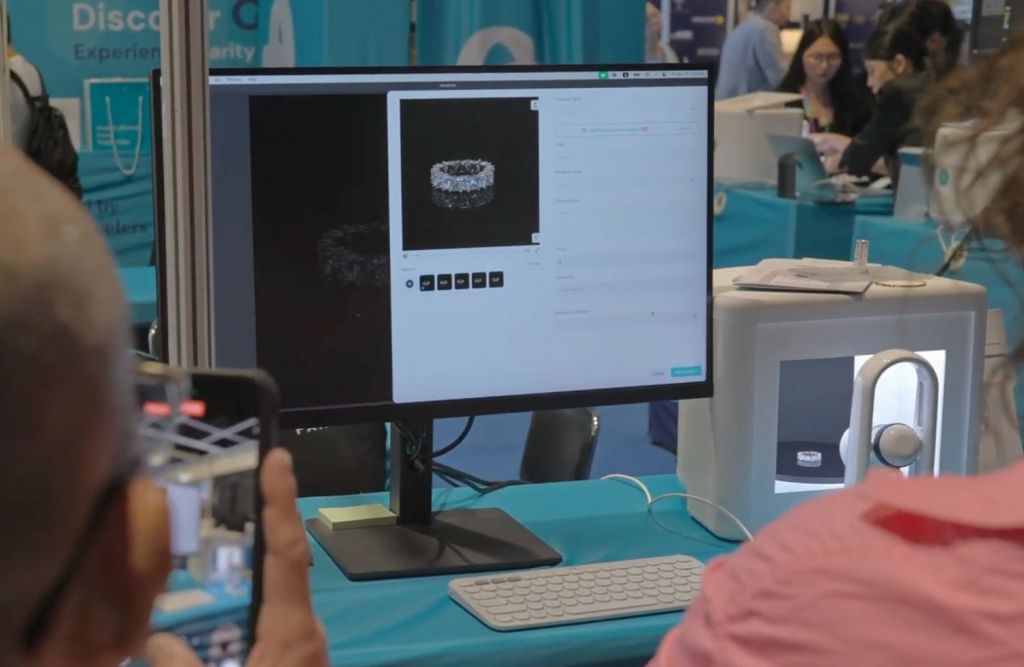
The Elite Kit Pro brings controlled lighting, macro imaging, mobile capture, and integrated editing into one standardized workflow, reducing variation between shoot and shortening turnaround time across channels.

This reduces variation between shoots, shortens turnaround time, and keeps imagery consistent across ecommerce, social, and marketing channels.
For teams, it enables scalable in house jewelry photography without adding complexity or relying on external photographers.
Business outcomes tied to better photography
Improving jewelry photography creates measurable impact across sales, operations, and customer experience. These improvements matter most at the exact moment a buyer decides whether to proceed or hesitate
Clear, consistent images help to:
• Increase conversion rates by reducing hesitation and answering buyer questions upfront
• Reduce product returns by setting accurate expectations around scale, finish, and detail
• Support premium pricing by clearly communicating craftsmanship and perceived value
• Shorten sales cycles by minimizing follow up questions and requests for additional images
For experienced jewelers, this impact is practical and observable. Photography quality directly affects trust, decision speed, and overall performance across ecommerce and sales channels.
A realistic approach
Jewelers do not need more creative experimentation.
They need systems that work reliably.
The most effective approach to jewelry photos that sell focuses on:
• Consistency over creativity
• Speed over complexity
• Clarity over styling
Purpose built tools allow jewelers to control image quality without hiring photographers or slowing operations.
What This Means for Jewelers in 2026
In 2026, buyers expect proof before they commit.
If your images answer their questions, they move forward.
If they raise questions, they hesitate.
Strong jewelry photography is now part of your sales infrastructure.
The jewelers who succeed treat photography as an operational asset and build workflows that support trust, efficiency, and consistency every day.

Leave a Reply