
The Gold Rush
As of this writing, the gold price stands at $2,465.02 per ounce in the professional gold bullion market. This price was just short of its all-time high from July 2024 at $2,483.68. If the trend persists, it may likely surpass its peak and go on to set a new record.
The chart below demonstrates how the gold price soared quickly compared to its stable standing years ago.

While this gold performance perplexes many, this is merely a case of monetary history repeating itself, bringing us all the way back to the beginning of civilization. But we’re not here to talk about the dawn of sound money or the history of gold but rather, to ensure that you’re prepared to respond as you face the gold rush at a time when the industry is facing a lot of headwinds.
So, what’s driving this rally? Let’s take a look.
What’s Driving the Surging Gold Price?
Interest Rate Cuts
The anticipation of interest rate cuts this September 2024 by the U.S. Federal Reserve is one of the main drivers of the gold price surge. While the U.S. Fed maintained that interest rate decisions remained dependent on data, financial experts warned that shying away from a supersized 50 basis point interest rate cut would risk a full-blown recession.
How does the interest rate affect gold prices?
Gold and interest rates have an inverse correlation. When the interest rate is low, the gold price is up, and vice versa; hence, a low interest rate makes stock investments less appealing which drives investors away from it and towards gold investments; thereby, driving the demand and the price up.
In times of economic slowdown, investors believe that gold, known as a safe-haven asset, will protect their wealth as it is resilient to any economic and financial crises.
Geopolitical Tensions
The ongoing conflicts between Russia and Ukraine and Israel and Iran are also major factors rallying the prices of precious metals. Gold’s performance at the height of the geopolitical tension between Israel and Palestine was not a coincidence but rather a direct response to the elevated conflict.
Where do you turn to when all other means of payment fail? Gold. As a safe-haven asset, gold attracts increased interest from investors when there are geopolitical uncertainties.
Central Bank Purchases
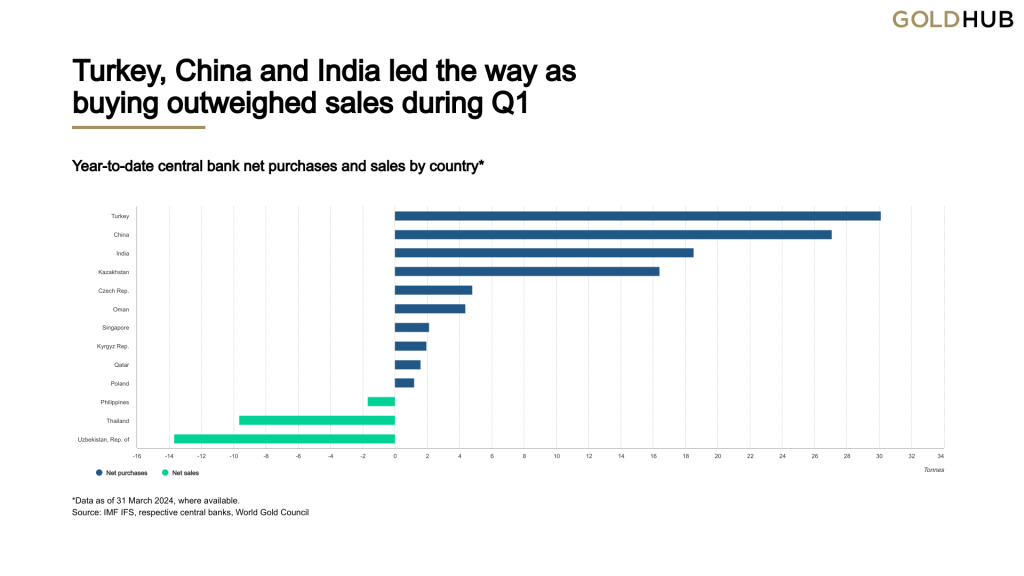
Globally, Central Banks have accelerated their gold purchases with China, India, and Turkey leading the demand. Overall, the demand in Q1 of this year totaled 290 tonnes. This voracious buying was influenced by a lack of trust in the global financial system backed by and denominated in U.S. dollars.
Strong Retail Demand
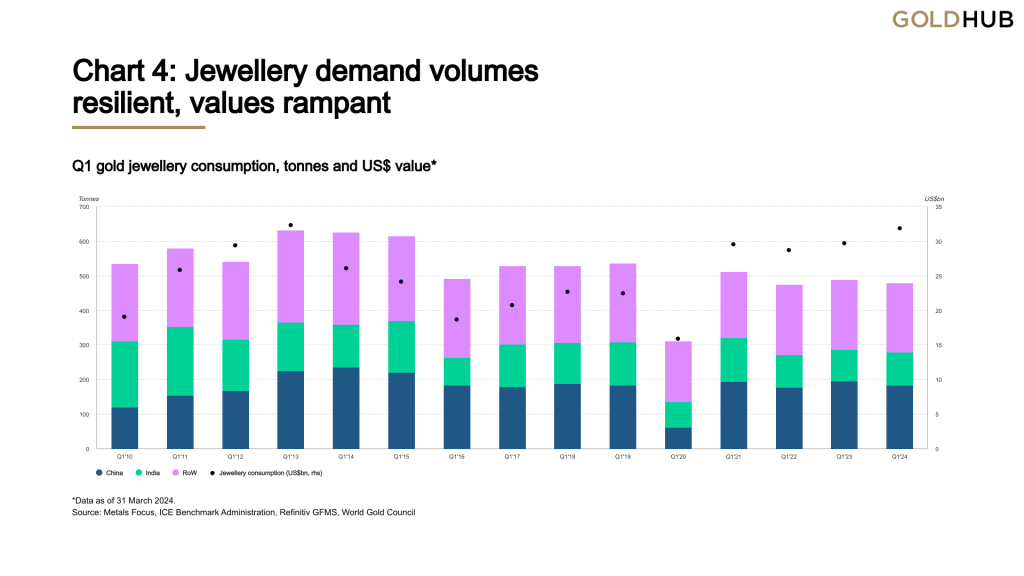
The growing appetite for gold by individual investors and consumers is also one of the many factors affecting gold performance. For instance, the demand for gold in Thailand is on the rise with gold bars and coin investments surging to seven (7) tonnes in the second quarter of the year. Gold jewelry demand also rose to two (2) tonnes despite high prices.
The same is true for China and India where gold jewelry is preferred for weddings and other gifts.
Inflation
Gold is seen as a hedge against inflation when the purchasing power of fiat currencies diminishes. This helps investors preserve wealth in volatile economic conditions.
How Will This Impact the Jewelry Industry?
The rise in gold prices has a direct impact on the jewelry industry. Knowing these impacts will make you fully adept at responding.
High Retail Prices
High gold prices mean high costs of raw materials, which translates into high gold retail prices for consumers. This can easily put off price-sensitive markets sending demand for gold jewelry in decline. However, this is not something to fear about. As you see, the jewelry demand has remained resilient despite high prices.
Jewelry/Gold Recycling on the Spotlight
As the retail price of gold jewelry increases, price-sensitive consumers begin to look for alternatives. For instance, Indian consumers have turned to gold recycling as a key source of gold supply.
Gold recycling is a process where old gold jewelry pieces and other materials made of gold are melted and reused to create new pieces and reintroduced to the market. Gold recycling is not new but it has been increasingly popular this time when gold prices are soaring.
The impact of rising gold prices has been felt in the Indian market. Last year, The World Gold Council reported that about 15% of the total gold used in the country was recycled — a clear demonstration of price-sensitive consumers’ reaction to the trend as they refrain from purchasing gold jewelry pieces at current price levels. Jewelers who sell gold-recycled jewelry pieces can turn this into an opportunity by highlighting the sustainability factor of recycled gold.
Tradition Over Trend
The long-term gold jewelry demand is set to remain robust, especially in cultures where gold jewelry holds a traditional and sentimental value. For instance, In India, gold symbolizes social and economic status. One only has to turn to the Ambani’s Wedding to realize the integral part that gold plays in ceremonies — from accessories, decorations, and clothing — everything was either gold colored or made in pure gold.
Although the current soaring prices might affect import levels and volume-based demand in the near term, tradition surpasses and will always surpass trends. The jewelry industry must remain confident in the fact that in countries where gold is part of the cultural ethos, the demand will always be there to carry the market in the long term.
How Should The Jewelry Industry Respond?
If you’re a seasoned jeweler, I’m pretty sure this is nothing new to you. You had your fair share of commodity rollercoasters. By now, you already mastered the art of responding to volatile conditions. If you’re a new jeweler, welcome to the jeweler’s life. Periods like this are inevitable and your response to this can either make or break your jewelry business.
Remind consumers that jewelry is an investment
Gold is a precious metal and gold jewelry, especially one that’s made from pure gold, is a valuable asset, in fact, more valuable than other jewelry investment pieces.
Positioning jewelry as an investment is one way to sustain luxury consumers’ appetite for gold jewelry pieces. Highlight its functions. For instance, while investors buy gold bullion as a store of value, jewelry pieces function as both an investment piece and an accessory that showcases unique and artistic craftsmanship.
A true jewelry lover and precious metal enthusiast understands this; hence, why consumers remain undeterred even in the face of record gold prices.
Avoid stockpiling but focus on your best-selling pieces
Focus on replenishing your best sellers to generate cash flow and discontinue slow-moving inventory. Know what you need and what your customer wants and reinvest in high-turning pieces. Further, avoid stockpiling because it can quickly deplete cash and put you in a vulnerable position if the price drops quickly.
Maintain your price structure
Maintaining your price structure amidst all the commodity market changes is reasonable; however, if you just reprice your gold jewelry collection, reprice based on the medium-long term underlying prices instead of the short term or until you see a 10% change in the price of gold or 5% if you’re working on narrow margins. This is to avoid suspicion of inflated pricing when the price of gold drops quickly.
Additionally, look at your pricing structure from the standpoint of consumers. Consumers don’t follow commodity pricing. They don’t understand how the same pieces of gold necklace, for example, have two different prices. Hence, when repricing, you should reprice your entire jewelry collection including existing stocks. You may also consider giving them a heads-up before implementing your new price structure. This will prevent them from suspecting you of dishonest pricing.
However, you may follow a different approach for B2B customers, such as wholesalers. This group is savvier and they understand that like them, you’re a business owner who must respond to rising material costs.
Whichever approach you follow, be prepared to justify your price changes to your consumers, and don’t forget to reiterate the value of your brand.
Offer Other Metal Alternatives
Whether you’re a designer or a jewelry retailer, this is a good time to incorporate other metal alternatives into your designs and offer other metal options to your customers. This is a great opportunity to revitalize your other non-gold collections but still offer a premium look and quality.
React But Do Not Overreact
In conclusion, monitoring metal commodity price changes is necessary but avoid knee-jerk reactions. This applies to both the rise and fall pricing changes. Keep your cautious optimism. The gold jewelry demand is elastic and the market, as it has proven time and time again, is resilient.
Connect with us through our social media platforms to stay informed and ahead of the trends.


Leave a Reply